


LUYCSD Community Report (2020–2024 & 2025 Plan)
When this work began back in 2020, it wasn’t because we had big funding or major partners. It started because we kept meeting women — widows, survivors of violence, young girls who lost parents during the war — who were barely surviving. Many were living day to day, doing small business just to keep their children alive. Some couldn’t read or write. Others had been carrying deep trauma for years.
We knew we had to do something, even if we had very little.
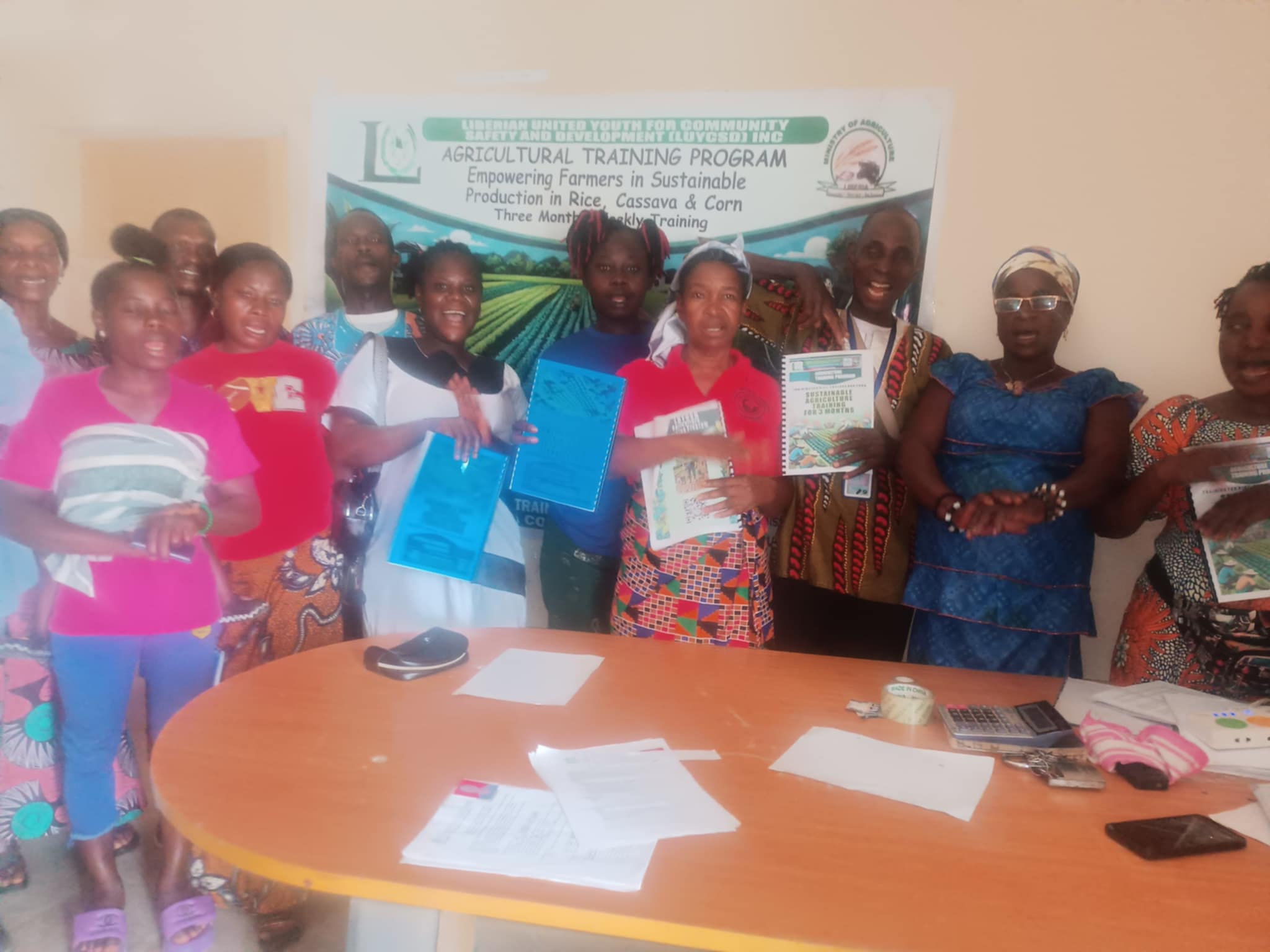
So between 2020 and 2024, we focused on three counties —
Bong (Gbarnga), Nimba (Ganta), and Grand Gedeh (Zwedru) —
and worked closely with market women, community leaders, and women who had never been part of any empowerment program before.
What We Accomplished (2020–2024)
We reached 250 war-affected women and adolescent girls.
Not just in workshops, but through follow-ups, home visits, market meetings, and group sessions.
We taught financial literacy and basic business skills.
Women learned simple things like planning a business, keeping records, saving weekly, and managing loans.
We introduced revolving funds in small groups.
Women borrowed, invested, and repaid — sometimes with unbelievable discipline.
We strengthened market linkages.
Women started selling cassava, pepper, palm oil, clothes, fish, and small household goods with confidence.
Average income increased by 35–45% within 12 months.
Some women who used to earn LRD 300–600 a day are now earning LRD 1,000–2,500. Others expanded from floor-selling to table markets.
Over 200 loans were fully repaid.
Women monitored each other, made group decisions on loans, and held each other responsibly — no force, just unity.
Women cooperatives became active.
They met weekly, discussed their challenges, supported one another, and kept strict savings rules.
One woman said it best:
“Before this program, I was struggling every day. Now I run my own small business and my children eat every day. Our community even supports what we do now.”
Monitoring was consistent.
Financial officer tracked income, repayments, and market progress in:
-
Ganta
-
Gbarnga
-
Zwedru
This was all done with very limited resources, but a lot of heart.
Where We Stand Now — Entering 2025
The work is not finished. Many more women in other counties are still living in the same struggle. And the 250 women we supported still need reinforcement, follow-up, and stronger market opportunities.
To make sure the project continues into 2025, we put aside USD 3,000 from our small internal savings — just like we did in the past when donors had not yet come on board.
The USD 3,000 is being used for:
-
startup refresher trainings
-
community group meetings
-
field transportation
-
training materials
-
local facilitators
-
strengthening existing cooperatives
It is small, but it keeps the work alive.
We are doing our part.
Now we are looking for partners to help us take the next step.
2025–2027 Expansion Plan: 5 Counties • 1 Vision • USD 200,000 Needed
We want to expand this work to 5 counties:
-
Bong
-
Nimba
-
Grand Gedeh
-
Lofa
-
Margibi
Why these counties?
Because the same struggles we saw in Ganta, Gbarnga, and Zwedru exist there too — women trying to rebuild from conflict, raising families alone, and living with no stable income.
What the USD 200,000 will achieve:
-
Empower 650 war-affected women & adolescent girls
-
Establish 15 women cooperatives
-
Create 15 village savings & loan (VSLA) groups
-
Provide 350 small business startup packages
-
Train women in financial literacy, record-keeping, group savings, and market planning
-
Strengthen community-led revolving funds
-
Support trauma-affected women with counseling & mentorship
-
Ensure income growth of 40–55% over 12 months
-
Create stronger markets through cooperative linkages
This will not just change businesses —
it will change households, children’s futures, and entire communities.
